
The United Nations’ Recognition of the Transatlantic Slave Trade as the Gravest Crime Against Humanity: Legal, Historical and Normative Implications

On 25 March 2026, the United Nations General Assembly adopted a landmark resolution recognising the transatlantic slave trade as the gravest crime against humanity and calling for reparatory justice.[1] The resolution, introduced by Ghana, received 123 votes in favour, 3 votes against and 52 abstentions. Although non‑binding, it represents the strongest international acknowledgement to date of the scale, brutality and enduring consequences of the transatlantic slave trade. This article places the resolution within the framework of international criminal law, state responsibility and global memory. It examines the historical realities of slavery, drawing on leading scholarship to explain why the world has never fully reckoned with the humanity of enslaved Africans. It then analyses the legal and political reasons behind the abstentions and rejections, including concerns about reparations, the ranking of crimes and the implications of recognising historical responsibility. The article also explores the normative significance of the resolution, arguing that it challenges ingrained hierarchies of suffering and compels states to confront the selective nature of global memory. A contrasting perspective is considered, acknowledging concerns about the legal coherence of ranking crimes against humanity. The article concludes that, despite these concerns, the resolution marks a significant normative shift that strengthens the global movement for reparatory justice.

1. Introduction
The United Nations General Assembly’s recognition of the transatlantic slave trade as the gravest crime against humanity has generated significant public attention, particularly regarding the states that abstained or voted against the resolution. While the vote itself is symbolic, its implications are far‑reaching. The resolution challenges the longstanding global tendency to soften or obscure the violence of slavery and demands a more honest engagement with its historical and contemporary consequences. This article examines the resolution through a legal and historical lens, analysing both the substance of the resolution and the reasons behind the divergent state responses.
2. Doctrinal Background: Crimes Against Humanity and UN General Assembly Resolutions
Crimes against humanity are defined in international law as widespread or systematic attacks directed against civilian populations.[2] Although the concept emerged during the Nuremberg Trials, its legal contours have evolved through treaties, customary international law and jurisprudence of international tribunals. The United Nations General Assembly does not have the authority to create binding legal obligations, but its resolutions carry significant moral and political weight and can contribute to the development of customary international law.
The recognition of the transatlantic slave trade as the gravest crime against humanity does not create new legal obligations. However, it reframes the historical narrative and strengthens the normative basis for claims relating to reparations, restitution and historical accountability. It also places pressure on states to confront their historical involvement in slavery and its continuing effects.

3. Historical Context: The Transatlantic Slave Trade and Its Mechanisms
Between the 16th and 19th centuries, an estimated 12 to 15 million Africans were forcibly removed from their homes and transported across the Atlantic. The violence of the transatlantic slave trade was systematic, intentional, legally protected, economically foundational and generational. Individuals were kidnapped, separated from their families, stripped of their identities and sold into a system that defined them as property. The Middle Passage was characterised by overcrowding, disease, starvation and abuse, resulting in mass death.[3]
Those who survived were subjected to chattel slavery, a regime in which their bodies, labour and reproductive capacities were owned and controlled. They endured physical punishment, sexual violence, forced breeding and the constant threat of sale. Their cultural practices, languages and names were suppressed. Their children also inherited their enslaved status. The violence extended beyond labour: historical records document the extraction of hair for wigs, the use of teeth for dentures and the commodification of bodies even after death.[4]
Despite this, global narratives have often softened the reality of slavery by referring to it as “labour,” “a trade,” or “a dark chapter.” This minimisation reflects what Saidiya Hartman describes as the “afterlife of slavery,” in which the full truth of the violence is diluted or obscured.[5]
4. Analysis of the UN Resolution
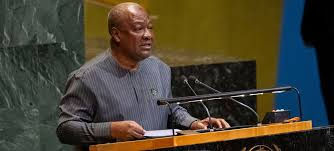
The 2026 United Nations resolution represents the most explicit and far‑reaching international recognition of the transatlantic slave trade to date. It does three unprecedented things. First, it declares the transatlantic slave trade the gravest crime against humanity. This is the strongest language the United Nations has ever used regarding the transatlantic slave trade placing it at the apex of global moral concern. Second, it affirms that the legacies of slavery are not historical residues but structural forces that continue to shape contemporary racial and economic inequalities. Third, it calls for reparatory justice, signalling that acknowledgement alone is insufficient without material remedy. The resolution therefore marks a decisive shift from decades of symbolic remembrance toward a framework of legal and political accountability. It transforms the slave trade from a moral tragedy into a formally recognised international crime with contemporary implications for states, institutions and global governance.
Ghana’s leadership reflects its historical role as a major departure point for enslaved Africans and its contemporary commitment to reparatory justice. The resolution aligns with broader African Union efforts to secure historical accountability and recognition of the enduring harms of slavery.
4.1. Global Memory, Hierarchies of Suffering and the Normative Significance of the Resolution
A central contribution of the resolution lies in its challenge to the longstanding global failure to reckon fully with the humanity of enslaved Africans. Although the violence of the transatlantic slave trade was systematic, intentional, legally protected, economically foundational and generational, international discourse has frequently softened its reality. Slavery is often described in euphemistic terms such as “labour,” “a trade,” or “a dark chapter,” rather than as a regime of total domination involving kidnapping, forced transportation, sexual violence, family separation, cultural erasure and the commodification of human bodies. This minimisation reflects what Hartman identifies as the afterlife of slavery.[6]
The abstentions reveal a deeper truth about global memory and the politics of recognition. When states decline to affirm that slavery constitutes the gravest crime against humanity, their decision reflects discomfort with accountability, fear of reparations, reluctance to confront their own historical involvement and a hierarchy of whose suffering is permitted to be recognised as universal. The Holocaust is rightly taught with specificity, precision and moral clarity, whereas slavery is often taught with euphemism and abstraction. This divergence does not arise from the nature of the atrocities themselves but from the political contexts in which they are remembered. As Mamdani argues, states are more willing to acknowledge atrocities in which they were not perpetrators than those in which they were directly implicated.[7]
The deeper issue concerns whose pain is allowed to be understood as a universal human tragedy. Scholars such as Hartman,[8] Mbembe,[9] Mamdani,[10] and Beckles have demonstrated that certain histories are framed as global moral lessons, while others are relegated to regional or “complicated” narratives.[11] In this hierarchy, some victims are recognised as fully human, while others are reduced to historical abstractions. The resolution challenges this imbalance by asserting that slavery was not merely an economic system but a global crime of unparalleled scale, whose consequences continue to shape contemporary racial and economic inequalities.
The significance of the resolution is therefore not only legal or political but also emotional and moral. Discussions about slavery involve questions of justice, memory, silence and the emotional weight of inherited trauma. The world has rarely created a space in which the full truth of slavery can be articulated without dilution. Naming the atrocities is the first step toward recognition, accountability, reparations and healing. The resolution thus represents an important moment in which the international community is asked to confront a truth it has long avoided.
4.2. A Contrasting Perspective: Concerns About Ranking Crimes Against Humanity
Some states and scholars have expressed concern that identifying the transatlantic slave trade as the gravest crime against humanity risks creating a hierarchy of atrocities that may be difficult to justify within existing legal frameworks. International criminal law traditionally avoids ranking crimes, emphasising instead their shared characteristics of scale, intent and systematic nature. Critics argue that elevating one atrocity above others may complicate legal coherence, undermine the universality of the category or be perceived as diminishing the suffering of victims of other crimes, such as genocide or ethnic cleansing.[12]
However, this argument does not negate the resolution’s normative significance. Rather, it highlights the tension between legal formalism and historical reality. The resolution does not diminish other atrocities but insists that the transatlantic slave trade be recognised with the same moral clarity afforded to other globally acknowledged crimes. The contrasting perspective therefore underscores the need for careful legal reasoning while affirming the importance of historical truth.
5. State Responsibility and Abstentions
The voting pattern surrounding the resolution reveals the political tensions that continue to shape global memory. The resolution passed with 123 votes in favour, 3 votes against and 52 abstentions. The three states that voted against the resolution were the United States, Israel and Argentina. The abstentions included the United Kingdom, France, Germany, Italy, Spain, the Netherlands, Belgium, Portugal, Sweden, Denmark, Ireland and all other European Union member states.
Legally, many abstaining states expressed concern that supporting the resolution could imply acceptance of responsibility for historical crimes, potentially opening the door to reparations claims. Others objected to the idea of ranking crimes against humanity, arguing that international law does not traditionally establish hierarchies of atrocity. Some states adopted a position of diplomatic caution, seeking to avoid voting against a condemnation of slavery while also avoiding the implications of voting in favour.
Ireland’s abstention is particularly striking. As a state that positions itself as a moral voice in international affairs, especially on issues of human rights, decolonisation and global justice, Ireland’s decision appears at odds with its public identity. Crucially, Ireland would not be held liable for the transatlantic slave trade; it was not a colonial slave‑trading power, nor did it profit institutionally from the system in the way that Britain, France, Portugal, Spain, the Netherlands or Belgium did. Its abstention therefore cannot be explained by fear of legal responsibility.
Instead, Ireland’s abstention reflects a different dynamic: political solidarity within the European Union. The EU member states voted as a bloc, with all abstaining on this occasion. This collective positioning demonstrates the strength of intra‑EU diplomatic alignment, even when individual states might have taken a different stance if voting independently. Ireland’s abstention therefore reveals the tension between its national moral identity and its geopolitical alliances. It shows how global memory is shaped not only by historical responsibility but also by contemporary political relationships, strategic interests and the desire to maintain cohesion within regional blocs.
Mamdani’s analysis of political identities helps explain this reluctance. States are more willing to acknowledge atrocities in which they were not perpetrators than those in which they were directly implicated.[13] Ireland’s abstention, however, shows a more complex reality: even states without historical culpability may abstain when their political alliances make full recognition diplomatically inconvenient. The abstentions therefore reveal a deeper truth about the politics of recognition: that global memory is shaped not only by moral considerations but also by geopolitical interests, national narratives and the desire to avoid political isolation.

6. Reparations Frameworks: Legal Possibilities and Practical Examples
Reparations in international law can take many forms. They may include financial compensation, but they can also involve restitution, rehabilitation, satisfaction and guarantees of non‑repetition. Germany’s reparations to Holocaust survivors included financial payments, the return of property and long‑term support funds.
In the context of slavery, reparations could involve the return of African cultural heritage held in European museums, investment in Caribbean and African economies that were impoverished through colonial extraction, formal state apologies acknowledging responsibility or educational reforms that accurately teach the history of slavery. These examples illustrate why some states fear that supporting the resolution could lead to legal or political obligations.
The 2026 resolution strengthens the normative basis for such claims. It affirms that the harms of slavery were not only historical but structural and ongoing. Beckles’ work demonstrates that the economic underdevelopment of many African and Caribbean states is directly linked to the extraction of wealth during slavery and that reparations are a matter of justice rather than charity.[14] The resolution therefore provides a legal and moral foundation for future reparations claims grounded in established principles of international law.
7. Conclusion
The United Nations’ recognition of the transatlantic slave trade as the gravest crime against humanity marks a significant normative shift in international law and global memory. For the first time, the international community has named slavery with the clarity its victims were denied in life. This recognition challenges centuries of minimisation and forces states to confront the reality that the modern world was built on the systematic dehumanisation of African people.
Yet the vote map tells its own story. The states that abstained or voted against the resolution were overwhelmingly Western. The very states historically entangled in slavery, colonialism or their afterlives. Their reluctance reveals how deeply questions of historical responsibility still unsettle the political order. Even Ireland, a state with no direct culpability and a strong moral identity in global justice spaces, chose to abstain in solidarity with its EU partners. This pattern shows that the greatest resistance to naming slavery as the gravest crime comes from those who fear the implications of doing so: implications for reparations, for national narratives and for the stories that nations tell about themselves.
Nonetheless, this resistance only underscores the significance of the resolution. The overwhelming support from Africa, the Caribbean, Latin America, Asia and the Pacific signals a decisive shift in global moral authority. The Global South is no longer waiting for Western permission to define historical truth. The resolution affirms that the legacies of slavery are structural and ongoing. It further affirms that justice requires more than remembrance, it requires repair.
This moment is therefore both critical and hopeful. Critical, because it exposes the political discomfort that still surrounds accountability. Hopeful, because it establishes a normative foundation for reparatory justice grounded not in charity but in law. It invites states to move beyond symbolic gestures and toward meaningful action: returning stolen heritage, investing in communities harmed by slavery, reforming education and engaging seriously with reparatory claims.
The 2026 resolution is not an endpoint. It is a beginning, a global acknowledgement that the afterlife of slavery continues to shape our world and that justice demands more than silence. It brings international law closer to moral truth and brings the world one step closer to the justice that enslaved Africans and their descendants have demanded for generations.
[1] ‘UN resolution urges reparations for slavery’s “historical wrongs”’ (UN News, 25 March 2026) <https://news.un.org/en/story/2026/03/1167199> accessed 26 March 2026.
[2] Rome Statute of the International Criminal Court (adopted 17 July 1998, entered into force 1 July 2002) 2187 UNTS 90, art 7.
[3] ‘Middle Passage’ (Encyclopaedia Britannica, 12 March 2026) <https://www.britannica.com/topic/Middle-Passage-slave-trade> accessed 26 March 2026.
[4] D R Berry, The Price for Their Pound of Flesh: The Value of the Enslaved, from Womb to Grave, in the Building of a Nation (Beacon Press 2017).
[5] Saidiya Hartman, Lose Your Mother: A Journey Along the Atlantic Slave Route (Farrar, Straus and Giroux 2007).
[6] ibid.
[7] Mahmood Mamdani, Neither Settler nor Native: The Making and Unmaking of Permanent Minorities (Harvard University Press 2020).
[8] Hartman (n 4).
[9] Achille Mbembe, ‘Necropolitics’ (2003) 15 Public Culture 11.
[10] Mandani (n 6).
[11] Hilary Beckles, Britain’s Black Debt: Reparations for Caribbean Slavery and Native Genocide (University of the West Indies Press 2013).
[12] G Werle and F Jessberger, Principles of International Criminal Law (4th edn, OUP 2020) 45–47; M Drumbl, ‘Pluralizing International Criminal Justice’ (2005) 103 Michigan Law Review 1295, 1302–1305.
[13] M Mamdani, When Victims Become Killers: Colonialism, Nativism, and the Genocide in Rwanda (Princeton University Press 2001) 7–10.
[14] Hilary Beckles, Britain’s Black Debt: Reparations for Caribbean Slavery and Native Genocide (University of the West Indies Press 2013).


Comments