
Understanding the Iran-Israel Crisis: Power, Law and the Value of Life

Moments like this remind us that international law, for all its doctrines and debates, is ultimately a language we use to decide whose lives matter and whose losses can be absorbed into the margins of geopolitics. The celebrations and condemnations that erupted across the world in response to the strikes on 28 February 2026 reveal more about global hierarchies of fear, hope and belonging than they do about the legality of the violence itself. Some see justice, others see aggression, but civilians, whether in Gaza, Tehran, Dubai or Tel Aviv, experience only the consequences.
A human‑rights perspective asks us to look beyond the claims of governments and to focus instead on the people who have the least control yet pay the highest price. It challenges us to imagine an international system where protecting human dignity matters more than defending national power and where the value of a life does not depend on geography, politics or the interests of stronger states. That vision is not yet our reality but recognising the gap between the world we have and the world we need is the first step toward building something better.
Introduction
Iran’s present crisis, unfolding in early 2026, is the outcome of a long history in which foreign intervention, domestic authoritarianism and global inequality have shaped the country’s political identity. This article traces Iran’s path from monarchy to theocracy, examining how oil, geopolitics and international law have influenced its development. It considers how these forces continue to shape today’s conflict and the narratives used to justify it. The aim is to provide a clear and coherent account of how Iran arrived at this moment and what this reveals about the wider international order.
Oil, Empire and the Foundations of Modern Iran
The Discovery of Oil and the Expansion of Foreign Power
Iran’s modern political story begins with the discovery of oil in 1908, a moment that immediately drew Britain into the country’s economic and political life. The original 1901 D’Arcy Concession had granted a British speculator exclusive rights to explore, extract and sell Iranian oil for sixty years in exchange for only 16% of the net profits. Iran had no control over production, no oversight of accounting and no ownership stake in the company that would later become the Anglo‑Persian Oil Company. These terms were deeply unequal and reflected the colonial logic of the period.[1] Britain tightened its grip further in 1914 when it purchased a majority share in the company, transforming Iranian oil into a strategic asset of the British state. Iran protested repeatedly, but Britain used diplomatic pressure, legal threats and the threat of force to maintain control.[2] The situation escalated in 1932 when Reza Shah cancelled the concession in frustration, only to be compelled into a new agreement in 1933 that preserved British dominance despite minor improvements to Iran’s royalties.[3] This imbalance created a national sense of exploitation that shaped Iranian attitudes toward foreign powers for generations. The resentment that developed during this period became a powerful force in later political movements.
The Shah’s Installation and the Logic of Intervention

In 1941, during the Second World War, Britain and the Soviet Union invaded Iran to secure supply routes and ensure access to Iranian oil. The Allied powers forced Reza Shah to abdicate and installed his son, Mohammad Reza Shah Pahlavi, whose authority rested more on foreign strategic interests than on democratic legitimacy. Iran had already spent decades resisting British control over its oil, but each attempt at renegotiation had been met with pressure, legal threats or legal manoeuvres that preserved British dominance. The 1933 concession, imposed after Britain challenged Iran before the Permanent Court of International Justice, had only deepened the sense that Iran’s sovereignty was conditional on external approval.[4] The installation of the new Shah therefore marked not a fresh political beginning but the continuation of a pattern in which foreign powers shaped Iran’s leadership to protect their own economic and geopolitical priorities. Many Iranians view this moment as the beginning of a long struggle for genuine sovereignty, further making the moment a defining reference point for later Iranian nationalism and for the Islamic Republic’s enduring suspicion of Western intervention.
The 1953 Coup and the Destruction of Democratic Possibility
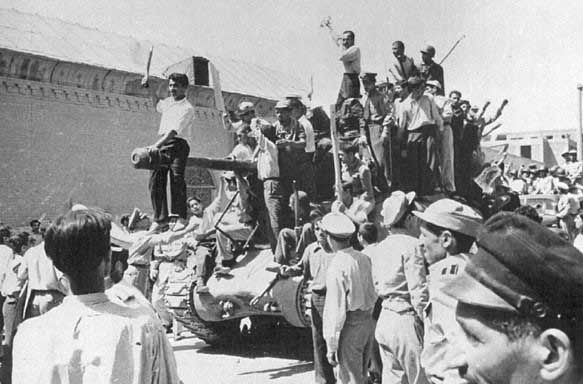
The election of Prime Minister Mohammad Mossadegh in 1951 marked a rare moment in which Iranians exercised genuine democratic authority over their political and economic future. His decision to nationalise the oil industry challenged decades of British control and asserted Iran’s right to manage its own resources. Britain responded with economic pressure and covert planning. Alongside this, the United States joined these efforts as Cold War anxieties deepened. The result was the 1953 coup, a joint CIA‑MI6 operation that removed Mossadegh and restored the Shah’s authority and entrenched Western influence, further reinforcing the perception that Iranian democracy was incompatible with Western strategic interests.[5] The coup is remembered as a profound betrayal that replaced a popular, democratic government with an authoritarian monarchy.[6] This memory of this intervention remains central to the rationale behind the Iranian distrust of Western powers and informs the Islamic Republic’s narrative of resistance.[7]
The Islamic Republic and the Architecture of Power
The Supreme Leader and the Structure of the State
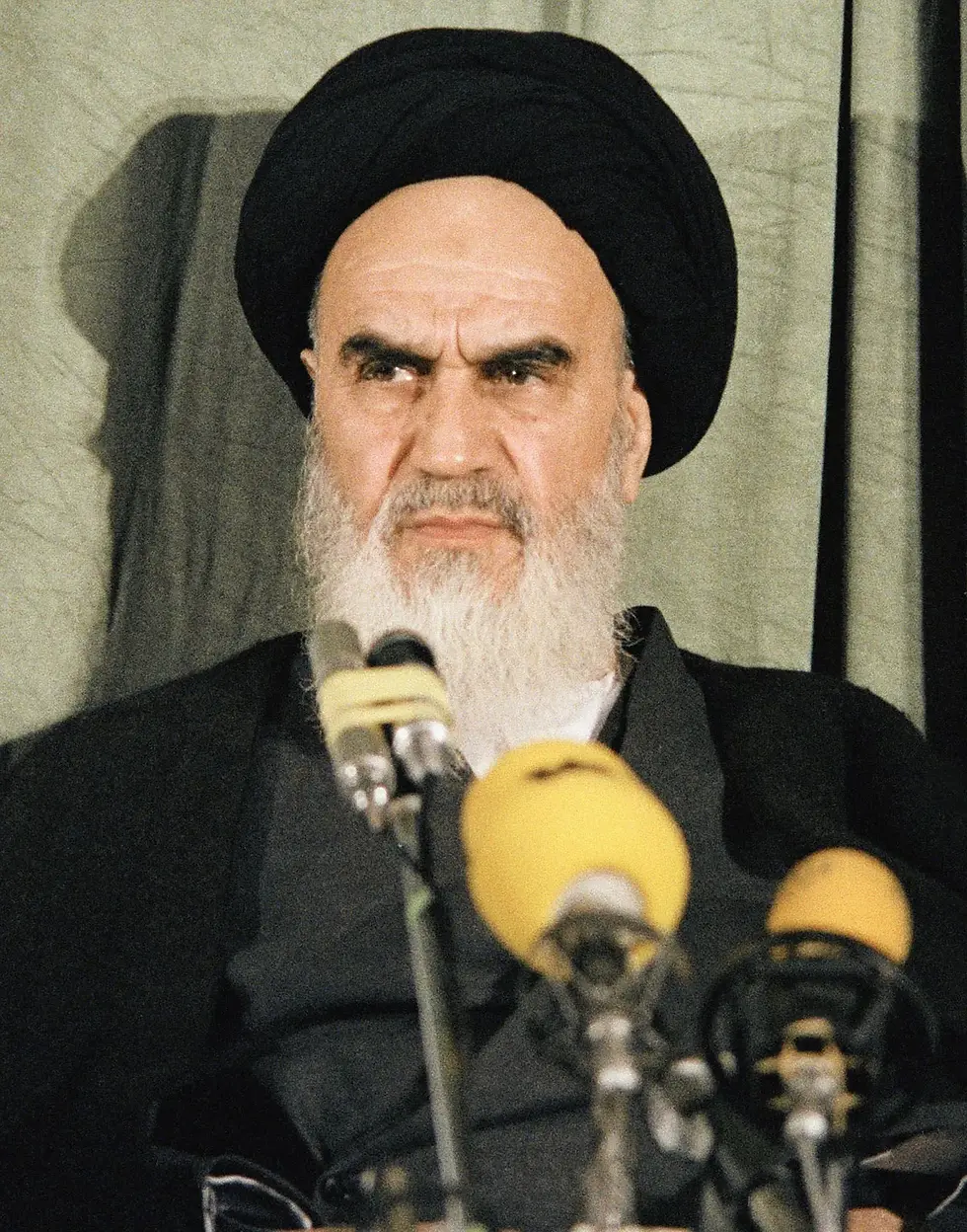
The 1979 Revolution replaced the monarchy with a political system built around Ayatollah Khomeini’s expanded doctrine of velayat‑e faqih, which transformed a narrow religious principle into a constitutional theory of state authority. The doctrine had existed in Shia jurisprudence only as a limited form of guardianship. It had never been used to govern a modern state. It had never been applied to an entire population. Khomeini reinterpreted it during his exile, arguing that a single jurist should hold ultimate political and religious power over the nation.[8] The collapse of the monarchy created a vacuum that allowed this theory to be written into the new constitution, which established the office of the Supreme Leader and placed all major institutions under his authority.[9] The result was a system in which elected bodies operate within boundaries defined by clerical power, and in which legitimacy flows downward from the Supreme Leader rather than upward from the electorate.[10] The Supreme Leader’s authority is designed to be absolute and elected institutions operate within boundaries that he defines. This structure has created a political environment in which dissent is suppressed, reform is structurally limited and legitimacy is tied to religious authority rather than popular consent.[11] The system’s rigidity has shaped every aspect of Iran’s domestic and foreign policy since 1979 and remains central to understanding the state’s behaviour in the present crisis.
Women, Religion and the Question of Oppression
The position of women in Iran cannot be understood without separating Islam as a faith from the political system that governs the country. Many Muslim women around the world do not experience their religion as oppressive and practise hijab as an expression of identity, spirituality or cultural belonging. The Qur’an does not mandate state‑enforced dress codes, morality policing or punitive restrictions on women’s autonomy.[12] These practices arise from political interpretation rather than religious obligation. The Islamic Republic, however, has transformed dress into a legal requirement and enforces it through surveillance, fines and imprisonment, with new laws imposing penalties of up to ten years for non‑compliance.[13]

The Woman, Life, Freedom movement, launched in 2022 after the death of Mahsa Amini in morality‑police custody, emerged as the most significant public rejection of compulsory hijab and gender‑based discrimination in the history of the Islamic Republic.[14] Enforcement remains inconsistent across the country, with some neighbourhoods in Tehran seeing open defiance while cities such as Isfahan continue to experience aggressive policing.[15] This contradiction reflects a deeper tension between personal faith and state power and it explains why Iranian women resist not Islam but the coercive use of religion to justify political control.[16] The struggle over hijab has therefore become a symbol of the broader contest between individual autonomy and authoritarian governance in the Islamic Republic.
Nuclear Politics and the Inequalities of the International Order
The Nuclear Non‑Proliferation Treaty and Its Hierarchies
The Nuclear Non‑Proliferation Treaty recognises only five nuclear‑armed states, all of which possessed nuclear weapons before the treaty existed. Other nuclear‑armed states, including Israel, India, Pakistan, and North Korea, exist outside this framework yet face different levels of scrutiny depending on their geopolitical alignment. Iran, which signed the treaty, is held to stricter standards than states that never joined, and this inconsistency fuels Iranian claims of discrimination. The nuclear order therefore reflects power rather than universal principle.⁶

Iran’s nuclear programme sits at the centre of a global system that claims to regulate nuclear weapons while applying its rules unevenly. The Nuclear Non‑Proliferation Treaty recognises only five nuclear‑weapon states (the United States, Russia, the United Kingdom, France and China) because they tested nuclear devices before 1 January 1967.[17] The treaty’s structure has long been criticised as discriminatory, because states like Israel, India and Pakistan remain outside the regime yet face different levels of scrutiny depending on their alliances.[18] Iran, which signed the treaty in 1970, is held to stricter standards than states that never joined and this inconsistency fuels its argument that the nuclear order reflects power rather than principle. The International Atomic Energy Agency has repeatedly raised concerns about undeclared Iranian nuclear material and activities, most recently in its 2025 safeguards report, which intensified international pressure on Tehran.[19] Iran responded by suspending cooperation with the agency and threatening to withdraw from the treaty altogether, a move that would mark the most significant shift in its nuclear posture since accession.[20] The escalation has been compounded by Israeli strikes on Iranian nuclear facilities and Iran’s retaliatory threats, pushing the non‑proliferation regime into its most volatile phase in decades.[21] This moment exposes the fragility of a system that relies on legal authority but is shaped by geopolitical hierarchy and it raises questions about whether the existing nuclear order can survive the pressures now placed upon it.
From Nuclear Concerns to Strategic Escalation
For decades, western pressure on Iran has long been justified by fears of nuclear proliferation and Iran’s support for armed groups across the region. These concerns shaped decades of sanctions and negotiations, but they do not explain the scale or direction of the escalation that unfolded in February 2026. The United States and Israel launched coordinated strikes on Iranian leadership, command centres and state infrastructure, marking a shift from nuclear containment to an effort to weaken or dismantle the Islamic Republic’s governing capacity.[22]

One of the first missiles struck the Shajareh Tayyebeh girls’ school in Minab, killing more than one hundred children and exposing the contradiction between the stated aim of targeting “regime assets” and the reality of civilian devastation. Iran responded by striking Israel directly and targeting US military installations hosted in Bahrain, Qatar, Kuwait, the UAE, Saudi Arabia and Iraq, signalling a deliberate choice to hit the regional architecture that enables American and Israeli power rather than the US homeland.[23] Analysts note that Washington now frames the conflict as a struggle over regime survival, while Israel views the moment as an opportunity to break Iran’s regional deterrence and reshape the strategic balance.[24] Iran’s retaliation, though legally grounded in self‑defence, risks widening the war even as it reflects a calculated attempt to avoid the red lines that would trigger a full US invasion.[25] This moment represents a transition from disputes over nuclear compliance to a broader contest over power, legitimacy and the future of the Middle East, with history suggesting that external pressure is more likely to harden the Iranian state than to bring about its collapse.
Global Attention and the Unequal Value of Suffering
The escalation between Iran, Israel and the United States has reshaped the global news cycle in ways that reveal how unevenly human suffering is valued. Gaza’s humanitarian catastrophe, marked by famine‑level hunger, mass displacement and thousands killed, has not ended, but it has been pushed out of the spotlight as international attention turns to the air war between Israel and Iran. This shift is not accidental; it is politically convenient for governments that prefer to frame the crisis through the lens of regional security rather than humanitarian obligation.[26]

Iran has long been one of the principal sources of financial, military and logistical support for Hamas and other Palestinian factions. The strikes on Iranian leadership weaken the networks that sustain Gaza’s armed resistance.[27] The new geography of conflict therefore benefits Israel by isolating Gaza further, reducing Iran’s capacity to provide material support and reframing Palestinian suffering as a secondary consequence of a larger regional struggle.[28] The result is a hierarchy of visibility in which the lives most affected by violence remain peripheral to diplomatic calculations and in which human suffering is acknowledged only when it aligns with geopolitical interests.[29] This moment exposes that the world’s rules and decisions don’t treat all people or countries equally and raises questions about whose pain is seen, whose is ignored and what that reveals about global power.
Why Dubai Dominates International Concern
The global reaction to the February 2026 strikes exposed a hierarchy of suffering that reflects power, wealth and cultural proximity rather than the scale of human loss. Gaza continues to endure famine‑level hunger, mass displacement and civilian death on a scale unmatched anywhere in the region, yet the world’s outrage intensified only when explosions hit Dubai’s coastline and disrupted the city’s image of luxury, safety and Western‑facing modernity. Dubai dominates international concern because it is a global financial hub, a transit corridor and a curated symbol of cosmopolitan stability that feels familiar to Western audiences in a way Gaza, Minab or Rafah do not.[30]

The presence of hundreds of thousands of Western expatriates, the shutdown of the world’s busiest international airport and images of fires near luxury hotels generated more alarm than the far higher civilian casualties elsewhere.[31] This disparity reveals a media ecosystem that centres places aligned with Western aesthetics and economic interests, while treating the suffering of communities outside that cultural frame as background noise.[32] The result is a moral landscape in which human life is not valued equally and in which visibility, outrage and empathy are distributed according to proximity to Western norms rather than the depth of human pain.[33]
TWAIL, International Law and the Question of Legitimacy
A Third World Approach to the Current Crisis
Third World Approaches to International Law argue that the international legal system was built to preserve the interests of powerful states and to discipline the Global South.

TWAIL scholars, such as Anghie, Matua and Chimni, show how legality is often defined by those with the power to enforce it and how legitimacy is constructed through narratives that privilege Western security concerns over the lived realities of non-Western societies. Iran’s experience illustrates this dynamic: the joint US - Israeli strikes have been widely described by legal experts as neither pre‑emptive nor lawful under the UN Charter, yet the language of legitimacy continues to favour the states that carried them out.[34] At the same time, Iran’s retaliation, though falling within the framework of self‑defence, has been framed as destabilising or illegitimate, revealing how the same legal categories are applied unevenly depending on geopolitical alignment.[35] TWAIL does not excuse the Islamic Republic’s repression or its violations of human rights, but it challenges the assumption that Western military action is inherently stabilising, lawful or humanitarian. The framework exposes how international law can normalise intervention by powerful states, obscure the political agency of those they target and render civilians suffering in the Global South as collateral rather than as a legal or moral crisis.[36]
Conclusion
The conflict between Iran, Israel and the United States cannot be understood without looking at the longer history that shaped it, foreign intervention under the Shah, authoritarianism under the Islamic Republic, unequal nuclear rules and an international legal system that often reflects the interests of powerful states more than the rights of ordinary people. These forces help explain why global reactions to the 2026 strikes are so divided. Some celebrate the attacks because they see Iran’s government as a threat to regional stability. Others condemn them because they recognise a familiar pattern in which stronger states use force with little accountability, while weaker states are judged more harshly for their responses. Legally, the situation remains contested: many experts argue that the US–Israeli strikes lack a clear basis under international law, while Iran’s retaliation fits more easily within the idea of self‑defence, but legality and legitimacy do not always align and the narratives that shape global opinion often privilege Western security concerns over the lived experiences of people in the region.

What remains constant is who suffers most. Civilians in Iran, Gaza, Israel and neighbouring countries are living through fear, loss and uncertainty because of decisions made far beyond their control. Their lives reveal the limits of an international system that claims to protect peace but too often protects power instead. For anyone committed to human rights, this moment is a reminder that the true measure of global order is not found in military victories or political alliances, but in whether the dignity and safety of ordinary people are placed at the centre of international decision‑making. A fairer future will require rethinking how the world responds to conflict, how the law is applied and whose lives are treated as worthy of protection.
In the end, the law may debate who acted first and who acted within its boundaries, but a human‑rights perspective demands a simpler truth: no strategic calculus, no doctrine of deterrence and no narrative of legitimacy can justify a world in which the lives of ordinary people are treated as expendable and it is this truth, not the claims of states, that should guide our judgment of this moment.
[1] E Abrahamian, A History of Modern Iran (2nd edn, Cambridge University Press 2018).
[2] S Cronin, The Army and the Creation of the Pahlavi State in Iran, 1910–1926 (I B Tauris 1997) 112–118.
[3] Concession Agreement between the Imperial Government of Iran and the Anglo‑Iranian Oil Company (signed 29 April 1933).
[4] Permanent Court of International Justice, Anglo-Persian Oil Co Case (UK v Iran) (1933) PCIJ Series AB No 61.
[5] MJ Gasiorowski, ‘The 1953 Coup D’état in Iran’ (1987) 19 International Journal of Middle East Studies 261.
[6] 1953 Iranian coup d’état’ (Wikipedia) <https://en.wikipedia.org/wiki/1953_Iranian_coup_d%27%C3%A9tat> accessed 1 March 2026.
[7] Zinn Education Project, ‘U.S. and Britain Topple Democratically Elected Government of Iran’ (19 August 1953) <https://www.zinnedproject.org/news/tdih/iran-coup/> accessed 1 March 2026.
[8] K A Kasra Aarabi, ‘What Is Velayat‑e Faqih?’ (Tony Blair Institute for Global Change, 20 March 2019) <https://institute.global/insights/geopolitics-and-security/what-velayat-e-faqih> accessed 1 March 2026.
[9] ‘Guardianship of the Islamic Jurist’ (Wikipedia) <https://en.wikipedia.org/wiki/Guardianship_of_the_Islamic_Jurist> accessed 1 March 2026.
[10] A Sayeed, ‘Velayat‑e Faqih: A Foundational Concept in Iran’s Governance and Regional Influence’ (31 October 2024) <https://ausafsayeed.com/velayat-e-faqih-a-foundational-concept-in-irans-governance-and-regional-influence/> accessed 1 March 2026.
[11] ‘Iranian Revolution’ (Wikipedia) <https://en.wikipedia.org/wiki/Iranian_Revolution> accessed 1 March 2026.
[12] The Qur’an 2:256 (“There is no compulsion in religion”).
[13] Human Rights Watch, ‘Iran: New Hijab Law Adds Restrictions and Punishments’ (14 October 2024) <https://www.hrw.org/news/2024/10/14/iran-new-hijab-law-adds-restrictions-and-punishments> accessed 1 March 2026.
[14] ‘Woman, Life, Freedom movement’ (Wikipedia) <https://www.hrw.org/news/2024/10/14/iran-new-hijab-law-adds-restrictions-and-punishments> accessed 1 March 2026.
[15] R Rezaei, ‘How Iranian Women’s Defiance Created Two Realities in Hijab Enforcement’ (15 October 2025) <https://iranwire.com/en/women/145582-how-iranian-womens-defiance-created-two-realities-in-hijab-enforcement/> accessed 1 March 2026.
[16] Office of the High Commissioner for Human Rights, ‘Justice and Accountability for Woman, Life, Freedom Protests’ (OHCHR, 7 April 2025) <https://www.ohchr.org/en/stories/2025/04/justice-and-accountability-woman-life-freedom-protests> accessed 1 March 2026.
[17] Arms Control Association, ‘The Nuclear Nonproliferation Treaty (NPT) at a Glance’ (July 2024) <https://www.armscontrol.org/factsheets/nuclear-nonproliferation-treaty-npt-glance> accessed 1 March 2026.
[18] Y Sharma, ‘What is the NPT, and why has Iran threatened to pull out of the treaty?’ (17 June 2025) <https://www.aljazeera.com/news/2025/6/17/what-is-the-npt-and-why-has-iran-threatened-to-pull-out-of-the-treaty> accessed 1 March 2026.
[19] D Albright, S Burkhard and A Stricker, ‘Analysis of the IAEA’s May 31, 2025, Comprehensive Iran NPT Safeguards Report’ (Institute for Science and International Security, 6 June 2025).
[20] Hamidreza Azizi, ‘Iran and Nuclear Opacity: Strategic Ambiguity, Retaliation, and Leverage’ (Middle East Council on Global Affairs, 24 September 2025).
[21] J Rodgers, ‘Iran and the Changing Character of the Nonproliferation Regime’ (20 June 2025) accessed 1 March 2026.
[22] Al Jazeera, ‘Why are the US and Israel attacking Iran? What we know so far’ (28 February 2026) <https://www.aljazeera.com/news/2026/2/28/us-and-israel-attack-iran-what-we-know-so-far> accessed 1 March 2026.
[23] Sky News, ‘Where Has Been Hit? Iran Retaliates Across Middle East After US–Israel Strikes’ (1 March 2026) <https://news.sky.com/story/where-has-been-hit-iran-retaliates-across-middle-east-after-us-israel-strikes-13513268> accessed 1 March 2026.
[24] R Takeyh, E Abrams, S A Cook, L Robinson, M Boot and E Ewers, ‘Gauging the Impact of Massive U.S.-Israeli Strikes on Iran’ (Council on Foreign Relations, 28 February 2026) <https://www.cfr.org/articles/gauging-the-impact-of-massive-u-s-israeli-strikes-on-iran> accessed 1 March 2026.
[25] ‘Is the US at war with Iran?’ (USA Today, 28 February 2026) <https://eu.usatoday.com/story/news/world/2026/02/28/is-us-at-war-with-iran/88916940007/> accessed 1 March 2026.
[26] Hani Hazaimeh, ‘Iran–Israel War Diverting Attention from Gaza Catastrophe’ (Arab News, 18 June 2025) <https://www.arabnews.com/node/2604920> accessed 1 March 2025.
[27] Iranian Support for Hamas (Wikipedia, last updated 2024) <https://en.wikipedia.org/wiki/Iranian_support_for_Hamas> accessed 1 March 2026.
[28] R Alaaldin, ‘Iran’s Strategy in the War on Gaza’ (Middle East Council on Global Affairs, 7 February 2024) <https://mecouncil.org/blog_posts/irans-strategy-in-the-war-on-gaza/> accessed 1 March 2026.
[29] Vision & Global Trends, Connected Fronts: Gaza, Israel and Iran in the New Geography of Conflict (June 2025) 17-18.
[30] V Kanaujia, ‘Iran attack on UAE: Why Tehran targeted Abu Dhabi; Gulf impact’ (The Financial Express, 1 March 2026) <https://www.financialexpress.com/world-news/iran-attack-on-uae-why-tehran-targeted-abu-dhabi-gulf-impact/4158087/> accessed 1 March 2026.
[31] Explained Desk, ‘Dubai airport shut: Where UAE stands in Israel–US–Iran conflict’ (The Indian Express, 1 March 2026) <https://indianexpress.com/article/explained/explained-global/dubai-airport-shut-where-uae-stands-israel-us-iran-conflict-10558173/lite/> accessed 1 March 2026.
[32] S Lockwood, ‘Big blasts heard over Dubai as people run for cover from Iranian missiles’ (Sky News, 1 March 2026) <https://news.sky.com/story/big-blasts-heard-over-dubai-as-people-run-for-cover-from-iranian-missiles-13513313> accessed 1 March 2026.
[33] L Pavithran, ‘UAE intercepts new wave of Iranian missiles: All you need to know’ (Gulf News, 1 March 2026) <https://gulfnews.com/uae/uae-intercepts-new-wave-of-iranian-missiles-all-you-need-to-know-1.500458669> accessed 1 March 2026.
[34] A Zwitter, ‘Neither preemptive nor legal, US–Israeli strikes on Iran have blown up international law’ (The Conversation, 28 February 2026) <https://theconversation.com/neither-preemptive-nor-legal-us-israeli-strikes-on-iran-have-blown-up-international-law-277173> accessed 1 March 2026.
[35] S Asem, ‘Are the US–Israeli strikes on Iran legal under international law?’ (Middle East Eye, 28 February 2026) <https://www.middleeasteye.net/explainers/are-us-israeli-strikes-iran-legal-under-international-law> accessed 1 March 2026.
[36] ‘Bombing of Iran and retaliatory strikes “a grave threat to international peace and security”: Guterres’ (UN News, 28 February 2026) <https://news.un.org/en/story/2026/02/1167059> accessed 1 March 2026.


Comments